
Family
The La Petite Nation Colouring Book, 28 local animals to colour
The beaver, the lynx, the black tern and 25 other animals from the region, presented in French and English and ready to colour. This book is by Robert Scales, the publisher of this site, which we state from the outset.
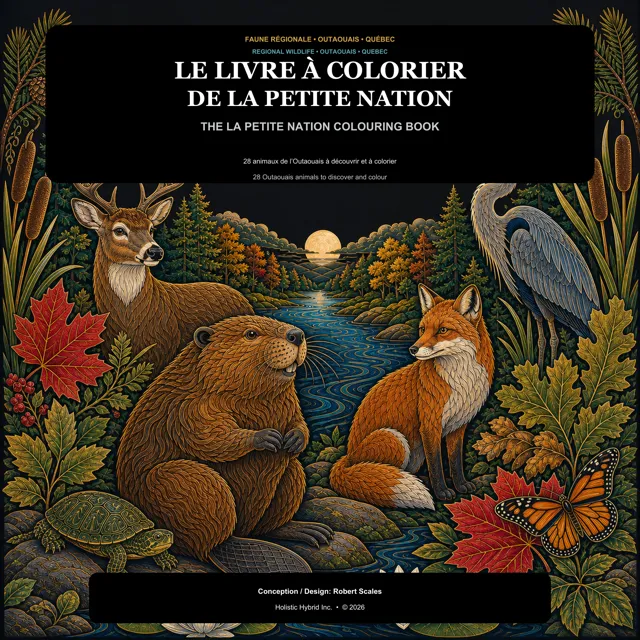
Full disclosure. Robert Scales, who founded and runs La Petite Nation, is the author of this book. In this article, he is promoting his own work. The Amazon links are affiliate links: if you make a purchase through them, La Petite Nation receives a small commission at no extra cost to you. As an Amazon Associate, La Petite Nation earns from qualifying purchases.
This is an exception. The site does not normally cover its publisher's own projects. However, as this book is devoted entirely to the animals of the region, we felt it useful to let you know that it exists. It is presented here with full transparency.
Overview
The La Petite Nation Colouring Book (in French, Le Livre à colorier de La Petite Nation) brings together 28 animals that actually live in La Petite Nation and the Outaouais. It contains no lions or giraffes, but rather the beaver in the marsh, the fox crossing the back road at dusk, the great blue heron standing motionless in the bay, and the lynx that very few people ever see.
Each animal is presented on a two-page spread:
- On the left, a bilingual French and English portrait describes its habitat, behaviour and a few concrete facts. It gives the French name, the English name, the scientific name and an Anishinàbemowin name drawn from published language resources.
- On the right, a full-page colouring illustration on a black background.
The illustrations are original and inspired by the forests, waters and seasons of the Outaouais. The text is based on public research with some creative licence, which the book states explicitly.
Details
- Author: Robert Scales
- Publisher: Holistic Hybrid Inc.
- Published: September 30, 2026
- Format: paperback, 58 pages, 8.5 × 8.5 in square
- ISBN-10: 1998094278
- ISBN-13: 978-1998094271
- Where to buy: on Amazon.ca (affiliate link)
As the price varies from time to time on Amazon, it is not listed here. Please check the book's page for the current price.
The 28 animals
Mammals are presented first, followed by birds, then reptiles, amphibians and one insect.
- North American beaver
- Muskrat
- White-tailed deer
- Moose
- American black bear
- Red fox
- Coyote
- Canada lynx
- Raccoon
- North American river otter
- North American porcupine
- Snowshoe hare
- Eastern chipmunk
- Big brown bat
- Wild turkey
- Great blue heron
- Black tern
- Wood duck
- Osprey
- Bald eagle
- Great horned owl
- Belted kingfisher
- Pileated woodpecker
- Snapping turtle
- Gray treefrog
- Spotted salamander
- Common garter snake
- Monarch
Some of these animals are familiar neighbours, such as the chipmunk that empties the bird feeder. Others are harder to observe. The black tern, for example, nests in one specific marsh in Parc national de Plaisance, and the book states clearly that its presence cannot be guaranteed to visitors.
Where to observe them in nature
The colouring book can be complemented by an outing to observe wildlife. Here are a few suggestions already featured on the site:
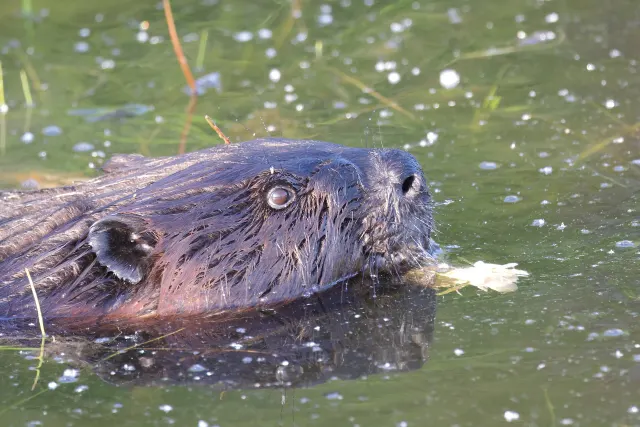
- Beaver, snapping turtle, great blue heron, treefrog: Parc national de Plaisance is the place to go. Its bays and marshes have many beaver lodges and turtles warming themselves on logs. Our Plaisance park guide explains where to begin.
- White-tailed deer: in winter, deer move through the village of Duhamel. Mornings or around 4 p.m. offer the best chances of seeing them. Please see our page on deer watching in Duhamel, and drive slowly.
- For a day out with children: our list of things to do with kids includes several outdoor activities.
The book also passes on good observation practices. One applies on the roads of the region: when a snapping turtle is crossing, it should not be lifted by the tail, as this can injure its spine. It is best to let it continue in the direction it was already heading.
Tip: bring the book to the park and check off the animals you observe. The colouring can be done afterwards, at home.
Who it is for
The book is intended first for families. Children colour, parents read the accompanying fact page, and everyone learns that the otter and the muskrat are two different animals.
It can also serve schools and nature clubs, since each portrait fits on one page and reads in both languages. Cottagers and weekend visitors will find a souvenir of the region other than a fridge magnet. Residents often appreciate seeing the animals they encounter every day given special attention.
The black background of the colouring pages makes the drawings stand out. The areas to be coloured are white.
The Anishinàbemowin names
La Petite Nation is located on land that the Algonquin Anishinabeg have travelled and cared for over thousands of years, which the book acknowledges at the outset. The Anishinàbemowin words come mainly from resources published by Kitigan Zibi and the Algonquin Anishinabeg Nation Tribal Council. Dialects and spellings vary from one community to another and, when a word is a general term (bird, duck) rather than the specific species name, the portrait says so. The illustrations do not reproduce sacred symbols or artwork belonging to any Nation.
For further reading, the Kitigan Zibi Algonquin pocket dictionary is available free of charge online. For wildlife in general, Québec.ca publishes fact sheets on Québec's wild animals (in French).
Purchasing the book
The book is sold on Amazon.ca. We would remind readers that it is a book by this site's publisher and that this link earns La Petite Nation a small commission. This revenue helps keep the directory and the events calendar free.
Sources
- Amazon.ca, book listing (affiliate link, checked October 15, 2026)
- The book itself: back-cover text, species list and source note (Sépaq, Government of Québec, Environment and Climate Change Canada, Kitigan Zibi, Algonquin Anishinabeg Nation Tribal Council)
- Kitigan Zibi, Algonquin pocket dictionary (PDF)
- Québec.ca, wild animals of Québec
Sources
The facts in this story come from these public sources. Every place and event mentioned has its own page, with its sources and the date it was checked. Legal notice
Links cited in the story
- amazon.ca · amazon.ca/dp/1998094278?tag=holistichyb09-20
- kitiganzibi.ca · kitiganzibi.ca/wp-content/uploads/2023/05/algonquin-pocket-dictionary.pdf
- Gouvernement du Québec (Québec.ca) · quebec.ca/agriculture-environnement-et-ressources-naturelles/faune/animaux-sauva
Sources for the places and events mentioned
- Tourisme Petite-Nation Outaouais · petitenationoutaouais.com/attraits/parc-national-de-plaisance/
- Plaisance (town) · ville.plaisance.qc.ca/tourisme/chutes-de-plaisance/
- MRC de Papineau · mrcpapineau.com/portrait-de-la-mrc/thurso/
- Duhamel (town) · municipalite.duhamel.qc.ca/fr/loisirs/activites-hivernales/observation-du-cerfs-
Read next
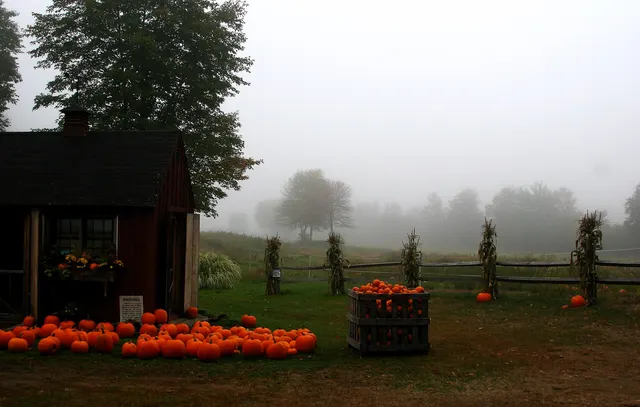
Top 5 Halloween outings in Petite-Nation
A night trail at a wildlife park, a haunted forest walk by headlamp and a vinyl-only vampire ball. Here are our five suggestions for Halloween 2026 in Petite-Nation, with times and prices.
Halloween 2026 in Petite-Nation: all the events
In 2026, Halloween falls on a Saturday. A night trail at Parc Oméga, a haunted forest walk in Mayo, a vampire ball in Ripon and a candy handout in Chénéville: here is the full weekend, day by day.
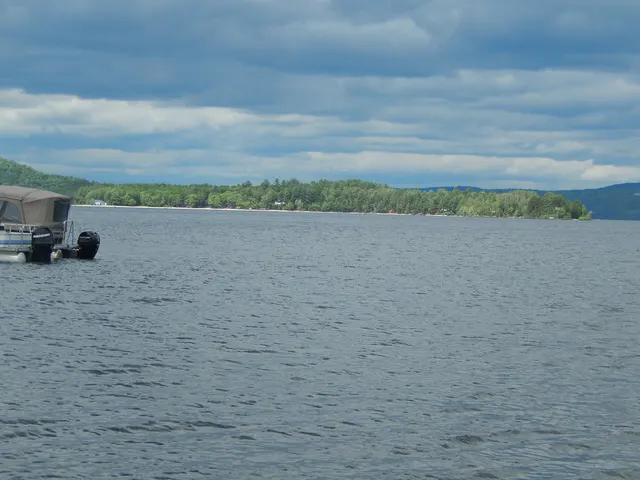
An ideal summer day in La Petite-Nation, from market to beach
Ripon's Saturday market, picnic shopping in Chénéville, a lifeguarded beach on Lac Simon, mini-golf, the lookout late in the day and soft-serve ice cream to finish.