
Living here
Radon at home: how to test this winter and what to do if your level is high
November is Radon Action Month. How to test your home, where to get a detector, the Town of Thurso's loan program and what to do if your level is above 200 Bq/m³.
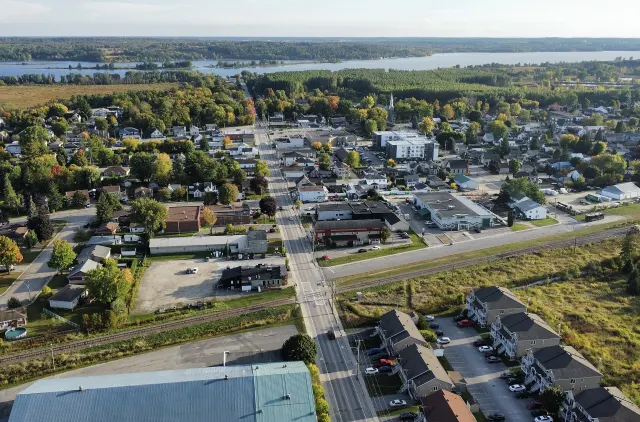
November is Radon Action Month. Québec's health ministry points out that November to April is the best time to test a home for radon. The test is simple and inexpensive, and most high readings can be fixed. Here is what you need to know.
What is radon?
Radon is a radioactive gas that comes from uranium naturally found in soil and rock. You cannot see, smell or taste it. Outdoors, it is diluted in the air and is not a risk. Indoors, it can seep in through any opening in contact with the ground: cracks in foundation walls and floor slabs, joints, sumps, crawl spaces, dirt floors and gaps around pipes. It builds up mostly in the lowest, least ventilated rooms, such as basements. Well water can also carry radon.
Why it matters
Radon is the second leading cause of lung cancer after smoking, and the leading cause among people who do not smoke. In Québec it is linked to more than 1,000 deaths a year, according to the Québec government. The risk rises with the radon level, the length of exposure and smoking. Radon does not cause asthma, allergies or bronchitis.
What about the Outaouais?
The average level in Québec basements is about 37 Bq/m³, but it can sometimes exceed 1,000 Bq/m³, according to the Québec government. In Health Canada's cross-Canada survey, published in 2012, 12.9% of the 62 homes tested in the Outaouais region were above the 200 Bq/m³ guideline, and 4.8% were above 600 Bq/m³. That is a small sample, and it cannot predict the result for any one house.
Radon levels can vary a great deal between homes, even similar houses next door to each other. Your neighbour's result tells you nothing about your own home. The only way to know your radon level is to test.
How to test your home
Health Canada recommends a long-term test of at least three months. The Québec government advises testing in winter, ideally between October and April, when doors and windows stay closed.
- Where to put the device: in the basement, about one metre above the floor, or on the ground floor if the basement is not lived in.
- Passive detector: leave it in place for at least three months, then mail it to the lab. It costs about $50, including the analysis, and can only be used once.
- Electronic monitor: it gives quick readings but is generally less accurate. Measure for at least one month, ideally three months in winter. If the reading is above 100 Bq/m³ after one month, extend the test to three months or confirm it with a passive detector. Choose a model recommended by the Canadian National Radon Proficiency Program (C-NRPP).
- After renovations: test again after major work on the foundation or insulation, since levels can change.
Where to get a detector
- Buy a passive detector: from the Québec Lung Association, from CAA-Québec (in store and online) or at some hardware stores. Health Canada also points to a list of radon test kits.
- Borrow an electronic monitor from the Québec Cancer Foundation: the Foundation lends monitors free of charge for one month, from October 1 to March 31, by reservation and with a refundable deposit. The closest regional centre is in Gatineau, at 555 de l'Hôpital Boulevard. As of November 9, the Gatineau loans were fully booked for the season. The Foundation says loans by mail may be possible; ask its Info-cancer line at 1-800-363-0063.
- Hire a professional: a C-NRPP certified measurement professional can do the test for you. Health Canada points to a search tool for certified professionals.
The Town of Thurso's detector loan
In 2026, the Town of Thurso bought two radon detectors that residents can borrow. A deposit is required. To check availability and the loan terms, contact the town hall, 161 Galipeau Street, at 819-985-2000. The office is open to the public Monday to Thursday, 8 a.m. to 12:15 p.m. and 1 p.m. to 4:30 p.m. It is closed to the public on Fridays.
If you live in another town, ask your town office or library whether they offer a similar loan.
If your result is above 200 Bq/m³
The Canadian guideline is 200 Bq/m³. If your result is higher, the Québec government recommends taking corrective action within one year.
- Hire a certified professional. Health Canada recommends a radon mitigation professional certified by the C-NRPP, who will find the most effective and affordable fix for your home. Health Canada's page on reducing radon links to the list.
- The most common fix: active sub-slab depressurization. A pipe with a small fan draws radon from under the house and vents it outside. According to Health Canada, the system can often be installed in a day and cuts radon by more than 80% in most homes, at a cost similar to other common home repairs.
- Steps that help: sealing foundation cracks and openings in contact with the soil, covering sumps and venting them outdoors, and improving basement ventilation. These have limited effect when levels are very high.
- Test again after the work to make sure it worked.
If you smoke, quitting is the fastest and least expensive way to lower your risk of lung cancer from radon.
Is there financial help?
We found no provincial program currently funding radon mitigation work. The Québec Cancer Foundation and Town of Thurso loans let you test at no cost. Some Québec towns refund part of the cost of a detector, so ask yours.
Questions
- Health Canada radon line: 1-833-723-6600.
- Québec Cancer Foundation, Info-cancer: 1-800-363-0063.
- To get your home ready for winter, see also our article on power outages, generators and wood stoves.
Sources
- Health Canada, About radon, Testing your home for radon, Reducing radon levels in your home and Calendar of health promotion days
- Health Canada, Cross-Canada Survey of Radon Concentrations in Homes, final report (2012)
- Québec.ca, Residential radon and Québec health ministry news release (in French, November 2, 2026)
- CISSS de l'Outaouais, radon news release (in French, November 3, 2025)
- Québec Cancer Foundation, radon detector loans and service announcement
- Town of Thurso, Le Thurso-Lien, October 2026 (in French)
- Checked November 9, 2026.
Sources
The facts in this story come from these public sources. Every place and event mentioned has its own page, with its sources and the date it was checked. Legal notice
Links cited in the story
- takeactiononradon.ca · takeactiononradon.ca/test-for-radon/radon-test-kits/
- takeactiononradon.ca · takeactiononradon.ca/test-for-radon/find-a-radon-measurement-professional/
- Gouvernement du Canada · canada.ca/en/health-canada/services/health-risks-safety/radiation/radon/reducing
- Gouvernement du Canada · canada.ca/en/health-canada/services/health-risks-safety/radiation/radon/about.ht
- Gouvernement du Canada · canada.ca/en/health-canada/services/health-risks-safety/radiation/radon/testing-
- Gouvernement du Canada · canada.ca/en/health-canada/services/calendar-health-promotion-days.html
- Gouvernement du Canada · canada.ca/en/health-canada/services/environmental-workplace-health/reports-publi
- Gouvernement du Québec (Québec.ca) · quebec.ca/en/housing-territory/healthy-living-environment/residential-radon
- Gouvernement du Québec (Québec.ca) · quebec.ca/nouvelles/actualites/details/le-radon-un-risque-invisible-a-ne-pas-sou
- CISSS de l’Outaouais · cisss-outaouais.gouv.qc.ca/wp-content/uploads/2025/11/Communique-de-presse-radon
- cancerquebec.ca · cancerquebec.ca/en/services/other-services/
- cancerquebec.ca · cancerquebec.ca/en/new-service-to-take-action-against-radon/
- Thurso (town) · ville.thurso.qc.ca/wp-content/uploads/2026/10/10-octobre-2026.pdf
Sources for the places and events mentioned
- MRC de Papineau · mrcpapineau.com/portrait-de-la-mrc/thurso/
- Thurso (town) · ville.thurso.qc.ca/nous-joindre/
Read next
Seniors living alone: services to help get through winter in La Petite-Nation
Meal delivery, friendly calls and visits, rides to appointments and helplines: the services for seniors in the MRC de Papineau this winter, and how family and neighbours can help.
This week in your town: Papineauville's budget, Thurso farmland for rent and a possible bus stop
Two council meetings, a consultation in Plaisance, a survey on a bus stop in Papineauville, town farmland for rent in Thurso and Saint-Sixte's last ecocentre Saturday: this week's municipal news.
Where to get a real Christmas tree in La Petite-Nation in 2026
A Christmas tree farm in Saint-André-Avellin, a cut-your-own farm in Lachute, tips to keep your tree fresh, and tree pickup after the holidays.